
Arrest Records in Smith County
Many agencies can create Smith County arrest records. The Smith County Sheriff's Office handles its own arrests and county jail booking records. The Tyler Police Department, Lindale Police Department, Whitehouse Police Department, and other municipal departments keep reports for arrests their officers make. Constables, Texas DPS Highway Patrol, and campus or school police can create separate reports as well. The agency named in the booking entry is the right first source for the officer's narrative.
Booking adds a second set of records. The jail records identity data, a booking event, charges, bonds, custody status, a photograph, and fingerprints. A magistrate then creates probable-cause and bond material. If a prosecutor files a case, the County Clerk or District Clerk starts a court file. These parts can differ because they capture distinct stages. An allegation shown at intake may be rejected, reduced, enhanced, amended, or dismissed later.
Smith County Jail Search Limits
The official Smith County Jail Search is the best first check for recent or current local custody. It is separate from the general Public Access landing page and requires JavaScript, cookies, and a supported current browser. Search controls could not be fully rendered during research, so no field should be assumed mandatory. Use accurate spelling, then note the booking identifier, booking date, arresting agency, listed charges, bonds, court, release status, and facility when the entry provides them.
A no-result screen does not prove that no Smith County arrest occurred. The person may have been released, cited, transferred, booked under a spelling variant, or moved to another county under a housing contract. Entry can also lag a recent event. Call the official jail or sheriff directory when release, bond, or physical location must be current.
Note: Record the retrieval time and booking number because custody, bond, and housing data can change after magistration or transfer.
Smith County Arrest Lookups
A complete Smith County arrest lookup uses every office that may hold a piece of the event. Start with current custody, then trace the arrest back to the creating police agency and forward to any filed case. Use state and federal custody systems only for the level they cover.
- Search the Smith County Jail Search with the full legal name. Save the booking number, date, agency, charge text, bond, and status without treating any allegation as a conviction.
- Contact the named arresting agency. Ask its records unit for the arrest or offense report by report number, date, approximate time, location, and involved-party role.
- Check Smith County Public Access after filing has had time to occur. Use the District Clerk for a felony or County Clerk Criminal Division for a Class A or B misdemeanor.
- Use the Texas DPS public CCH name search for the statewide public conviction and deferred-adjudication subset. For your own more complete Texas review, use the fingerprint-based FAST/IdentoGO process.
- Submit a focused public-information request when the online trail is missing or historical. Smith County accepts an electronic route and recognizes mail, fax, email, and in-person methods under each office's reasonable procedures.
- After transfer, use TDCJ Online Inmate Search for state prison custody or the Bureau of Prisons locator for federal custody. Call the listed custodian when systems conflict.
Request Historical Smith County Arrest Records
Historical booking detail and sheriff-created arrest reports may require the Smith County Public Information request route. Name the record, date range, agency, report or booking number if known, and the format preferred for inspection or copies. The office need not answer research questions or create a new record. Submission carries no filing fee, but lawful reproduction, media, programming, or labor charges may follow.
If charges are expected to exceed $40, Smith County may send an itemized estimate under Government Code §552.2615. Failure to respond within ten business days may cause the request to be treated as withdrawn. Section 552.301 gives an agency ten business days to seek an Attorney General decision when needed; it does not promise that all records will be produced in ten days. The county says it will provide a reasonable production date in writing when it cannot produce the material within ten working days.
Smith County Sheriff's Office
227 N. Spring Avenue
Tyler, TX 75702
Use the official county directory for the current records phone and counter hours.
Smith County Jail
206 E. Elm Street
Tyler, TX 75702
Confirm current jail contact details through the sheriff's official directory.
Ask the police department, not the county, for a Tyler, Lindale, Whitehouse, or other city officer's report. Judicial records tied to a later case go to the clerk and are outside the ordinary county PIA framework.
Arrest Records: What They Contain
A Smith County booking entry should be read field by field as a Smith County arrest record. The arresting agency tells you where to request the officer's report. The booking number identifies the jail event, while the cause number belongs to a filed court case. Arrest date and offense date can differ. Bond can change at magistration, and a listed charge may not match the offense later filed by a prosecutor.
| Booking number | The jail identifier for one intake event, distinct from a court cause number. |
|---|---|
| Booking date and time | When intake was recorded, which may differ from the offense or arrest time. |
| Arresting agency | The sheriff, municipal police, constable, state trooper, or other agency that created the arrest report. |
| Charges | Allegations listed at booking, subject to a later prosecutor and court decision. |
| Bond | The amount and type shown for each charge at that point in time. |
| Photograph policy | A booking image may exist, but release depends on law and agency policy; no image is reproduced here. |
| Release or location | The current status, release date, or facility when the public record supplies it. |
Internal housing, medical, suicide-watch, protective-custody, and risk information should not be presumed public. Juvenile law-enforcement records are restricted by Family Code §58.008, and active-investigation material may be withheld under Government Code §552.108.
Smith County Arrest to Magistration
Smith County booking ordinarily moves through intake and identity checks, property inventory, a photograph, fingerprints and tracking number, warrant and charge checks, health screening, classification, and magistration. Texas Code of Criminal Procedure article 15.17 requires an arrested person to be taken before a magistrate without unnecessary delay and generally within 48 hours. The magistrate advises the person of rights and sets or reviews bond. Cash, surety, and personal bonds follow different procedures.
Texas distinguishes an arrest under a warrant from a warrantless arrest based on statutory authority. The official Chapter 15 warrant procedures show the legal source for an arrest warrant and its return.
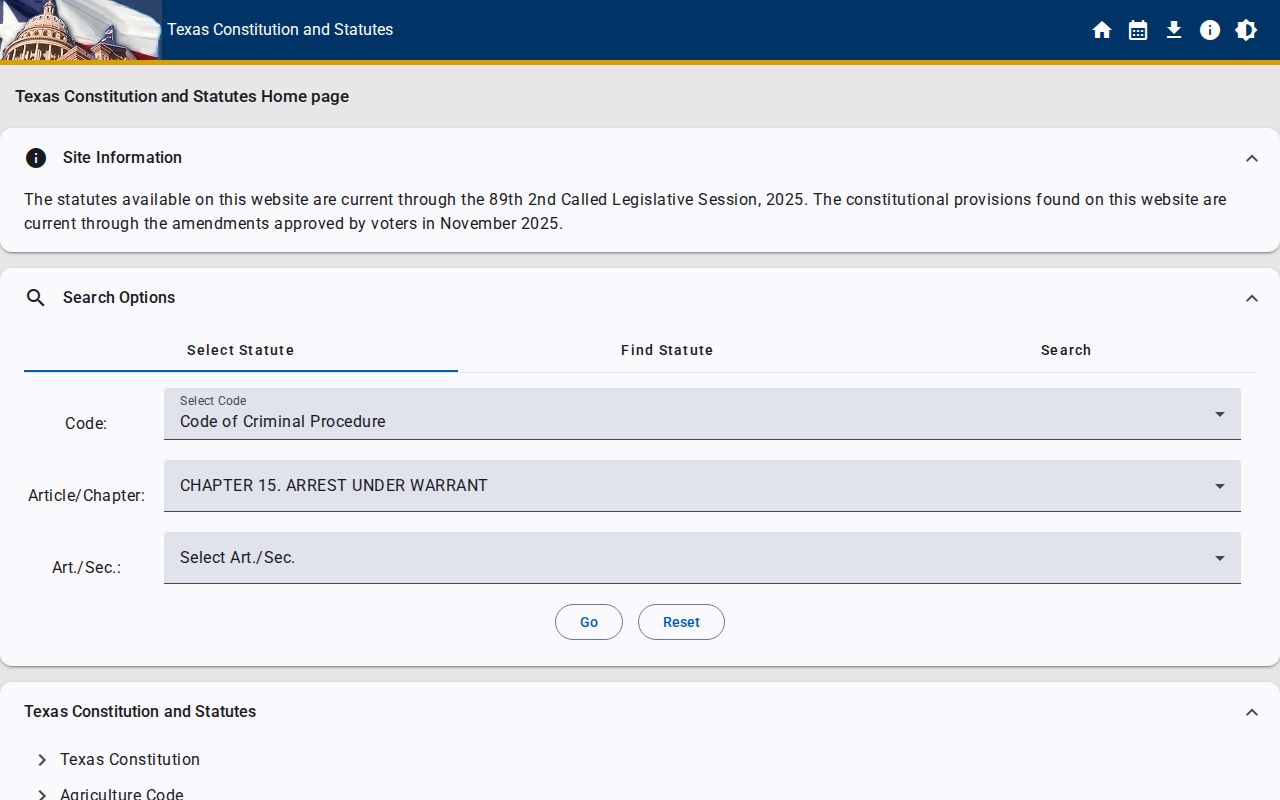
The statute source helps separate a warrant record from the later Smith County booking and court records created after execution.
No complete verified Smith County warrant database was found. Check the issuing court, call its clerk, contact the Sheriff's Office, and request releasable information. Municipal and justice-court warrants may not appear in the main felony or misdemeanor index. Never approach someone based on a search result or pay a caller who claims a warrant can be cleared through cryptocurrency.
Recent Smith County Bookings
The Smith County jail application is a current-custody and recent-booking tool, not a permanent arrest-history archive. Entries can roll off or change after release, transfer, a corrected name, a new bond order, or a filing decision. The public page should be treated as a time-stamped snapshot. For an old event, request the booking record from the sheriff or jail and the arrest report from the creating agency.
Smith County budget material provides scale without establishing guilt. It lists 660 beds at Central Jail, 432 at Low/Medium Risk, and 47 on the courthouse fifth floor, for 1,139 total listed beds. Smith County reported 7,042 book-ins in 2024, down from 7,847 in 2023. A Smith County book-in is an event, not necessarily one unique person and never a conviction count. Population, release practice, policing, transfers, and jail management can all affect the annual number.
Note: Smith County may house a booked person elsewhere under contract, so current physical location can differ from the original jail entry.
Where Smith County Custody Moves
Use the county jail for local pretrial custody. Once Texas receives a sentenced prisoner, the official TDCJ Online Inmate Search becomes the relevant locator.
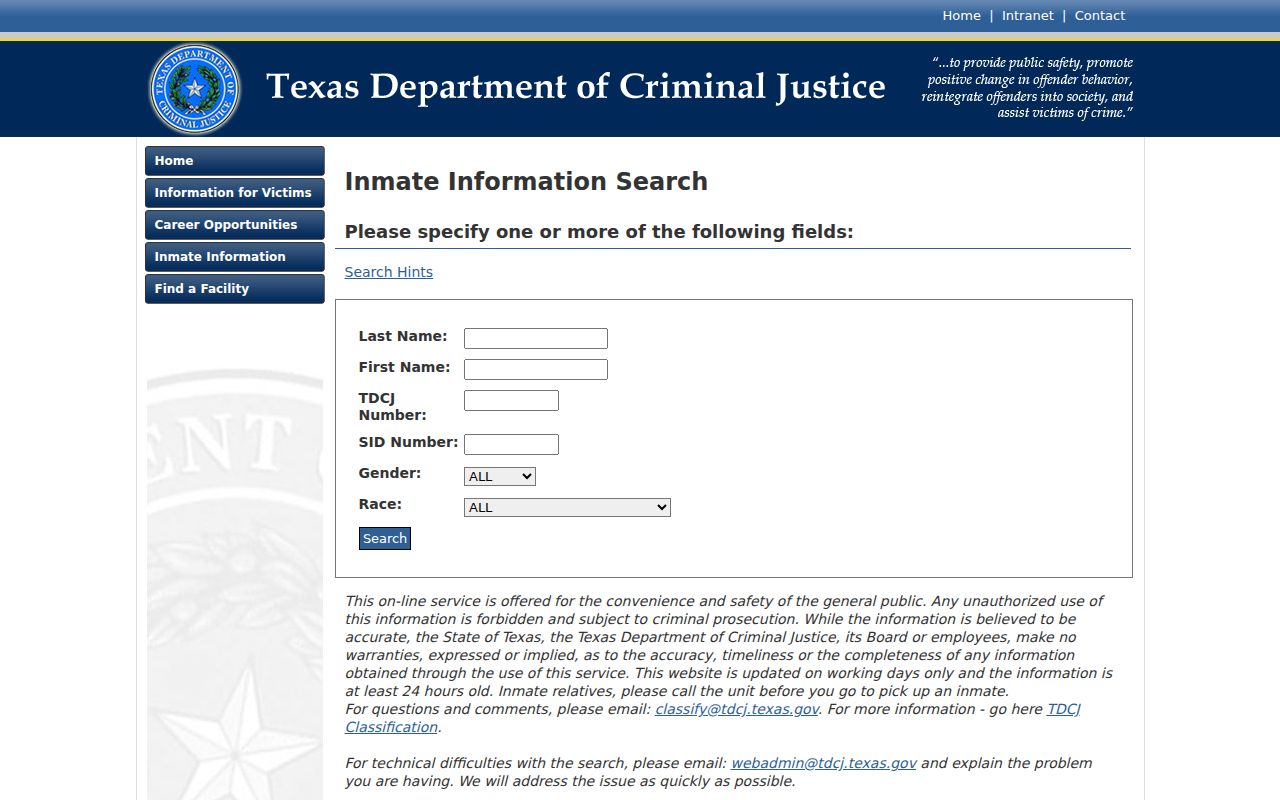
The state locator covers TDCJ custody and should not be used as proof that no Smith County arrest or pretrial booking occurred.
The broader TDCJ offender information page collects official state custody and status routes.
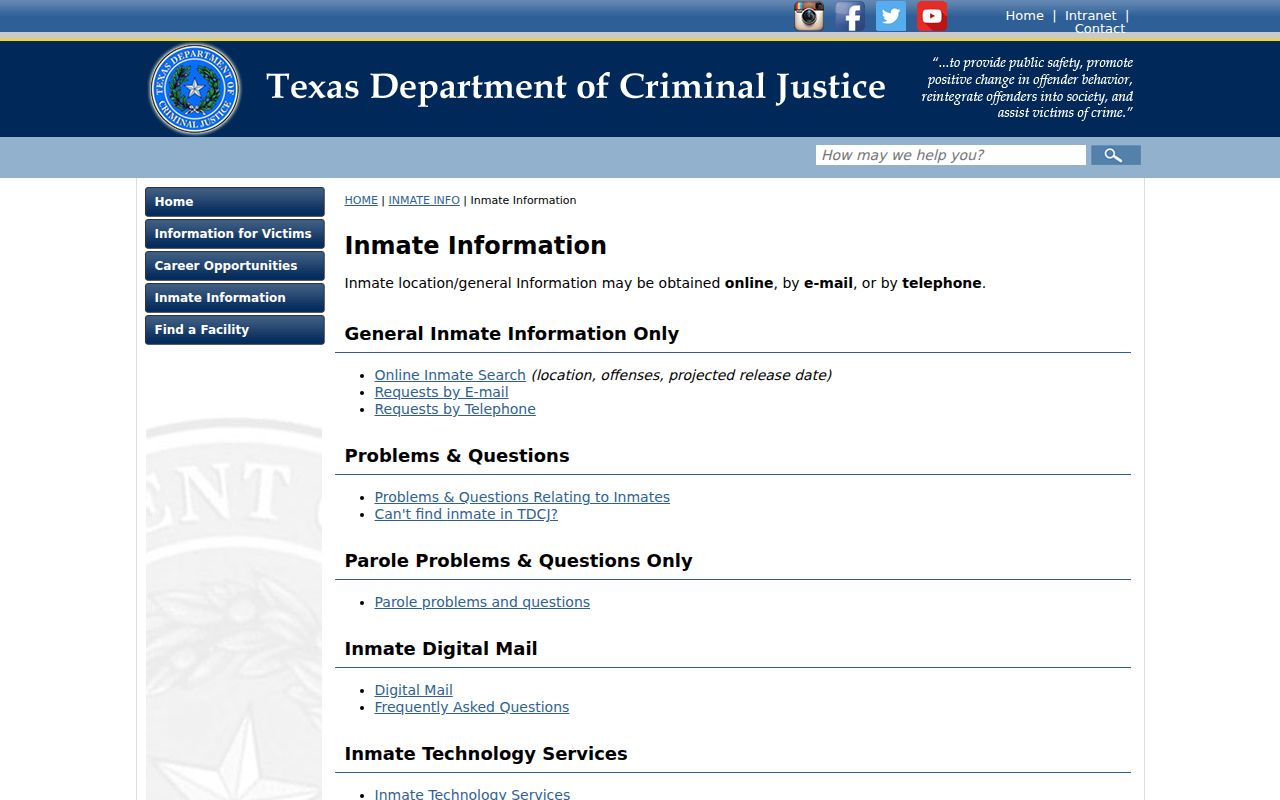
That source helps when a reader needs the correct state channel after a Smith County sentence or transfer.
Parole is another distinct stage. The Texas Board of Pardons and Paroles makes release decisions, while the TDCJ Parole Division supervises people released on parole or mandatory supervision.
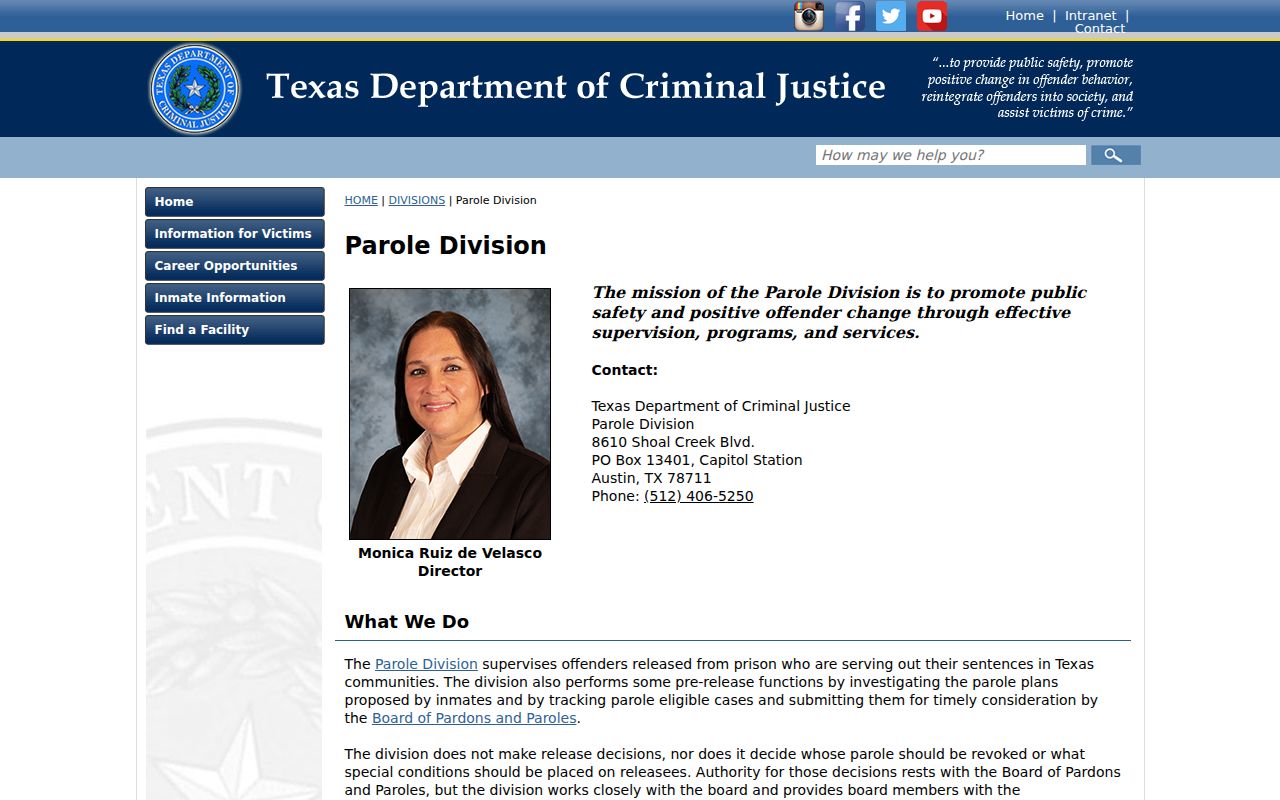
The parole source explains why a supervision status is not a current Smith County jail booking.
Federal custody belongs to a different system. The official Federal Bureau of Prisons Inmate Locator covers federal prisoners, while the federal court docket supplies case filings.
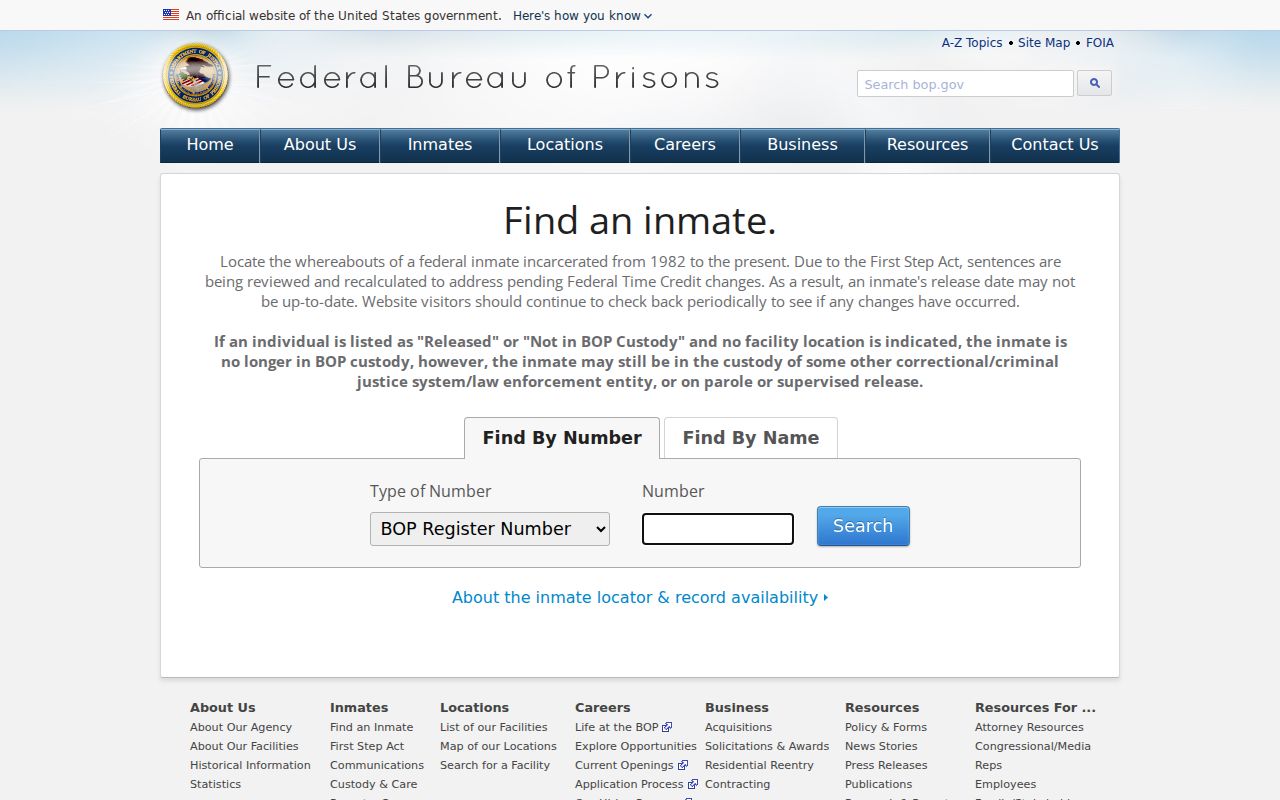
The BOP image marks the federal boundary and keeps federal confinement from being confused with Smith County or TDCJ custody.
Smith County Booking Reporting Chain
Fingerprints link a Smith County arrest event to the Texas Department of Public Safety Crime Records Division. DPS can assign the Smith County event to a Texas state identification number, or SID. The tracking incident number, called a TRN, follows the arrest downstream. Prosecutors and clerks then report charging decisions, case identifiers, pleas, dispositions, sentences, custody, and supervision data. Delays or missing fingerprint support can leave gaps between local records and the state file.
- SID
- The Texas identity number used to associate fingerprint-linked criminal-history data.
- TRN
- The number used to track an arrest event as later agencies report action on it.
- ORI
- The identifier for the arresting, prosecuting, court, or custody agency that reports a segment.
- Cause number
- The court's local case identifier, which begins after a charge is filed.
The public DPS name search is not the subject's complete record. It exposes the conviction and deferred-adjudication subset allowed by Government Code §411.135 and charges a $1 credit for a no-match search or an opened candidate record. Fingerprint review through FAST/IdentoGO is the reliable route for a person seeking the Texas record tied to their own identity.
Arrest Records vs Conviction Records
An arrest and a conviction come from different legal acts. An officer and booking jail document custody and allegations. A court documents what charge was filed, whether guilt was established, and what judgment followed. DPS may receive both the fingerprint event and later disposition, but the narrower public product does not turn every Smith County arrest into a public conviction.
| Question | Arrest record | Conviction record |
|---|---|---|
| Who creates it? | Arresting agency and booking jail | Court clerk after a judicial result |
| What does it show? | Custody and allegations at that stage | A recorded finding of guilt and judgment |
| Where is it kept? | Police, sheriff, jail, and fingerprint reporting systems | District or County Clerk and authorized state records |
| What may happen next? | Release, no filing, amended charge, dismissal, or court case | Sentence, appeal, supervision, nondisclosure, or eligible expunction action |
Note: An arrest is not proof of guilt, and a booking may end without charges, by dismissal, or with an acquittal.
Smith County Booking Payment Scam
A March 23, 2026 Smith County alert warned that impostors used accurate inmate information to demand bogus bond or ankle-monitor payments through Bitcoin ATMs, Cash App, or Venmo. Real booking facts can make a false call sound convincing. The sheriff stated that legitimate law enforcement will not call and demand payment. Verify any bond through the court, jail, or other official contact using a number obtained independently.
This local event is also a reason not to repost booking names or photographs. Official searches can answer a focused records question without turning allegations into an arrest gallery.