
Smith County Sex Offender Checks
The Texas Public Sex Offender Registry is the first official channel for a Smith County lookup. Texas DPS manages the public system under Code of Criminal Procedure Chapter 62. It is built for public-safety awareness, not as a general criminal-history report. A person can have a sex-offense case yet not appear because registration turns on the exact conviction or adjudication and the statute that applies. Conversely, a registry profile should not be read as a full account of every arrest or court event.
Start with a known name when identity is clear. For place-based safety research, combine the Smith County selector with city, ZIP, address, map, and radius tools. Postal names do not always match municipal limits. A Tyler mailing address, for example, can sit in unincorporated Smith County. The reporting or registration agency on a result helps identify which law-enforcement office can confirm it. Save the date and time of the search because an address, status, or verification entry can change.
Smith County Registry Search Paths
One search mode rarely answers every Smith County question. A name query tests identity, while the map and radius views test place. County and ZIP filters help catch results that a narrow city search may miss. If a result is absent, try aliases or a broader geographic control before treating the search as final. DPS warns that its information can change, so the registering agency remains the verification source.
The official Texas Chapter 62 page shows the law behind the registry and the categories that determine a duty to register.
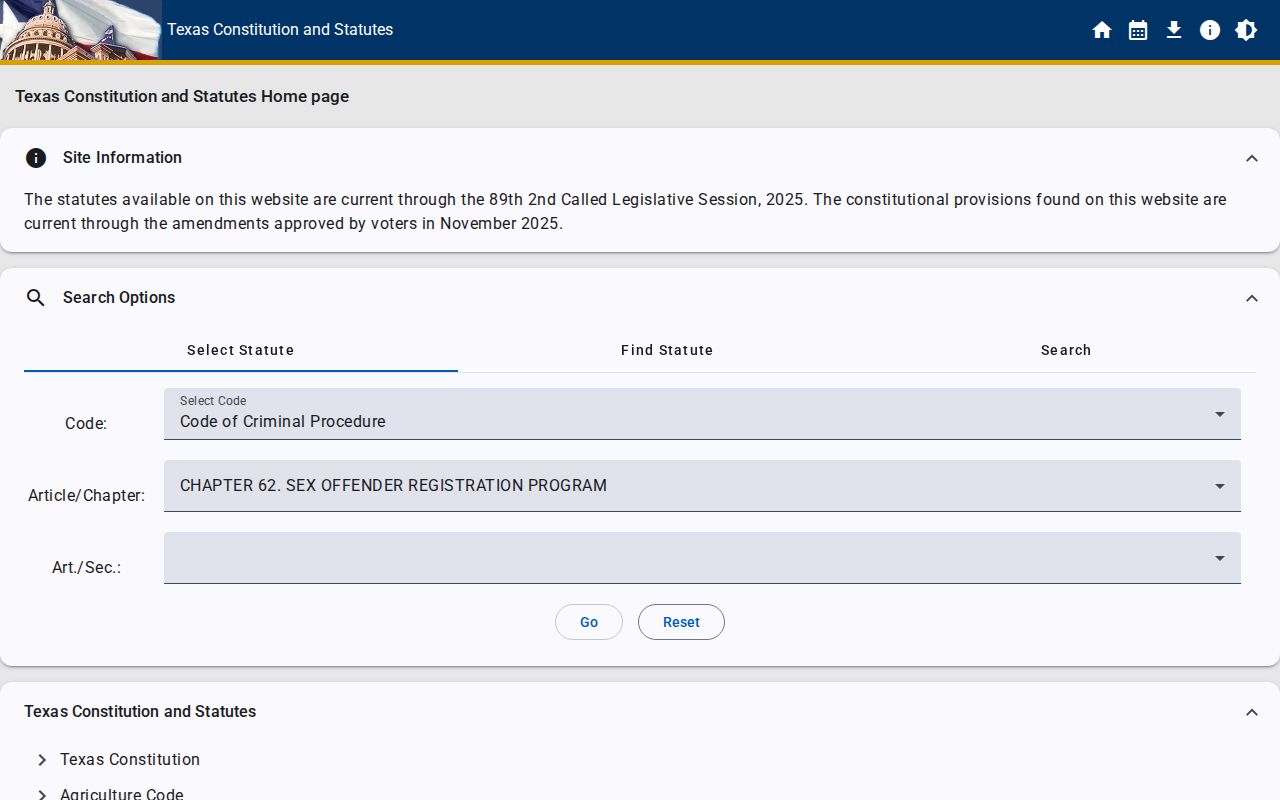
The statute view is useful when a profile's duration or reporting terms need context, but only the actual judgment and applicable provision settle an individual duty.
Texas Public Sex Offender Registry Searches
DPS offers more than a last-name box. The official Smith County registry can be approached as an identity search or a geographic check. Use the controls that match the question, then open the full profile instead of relying on a result-list summary. A likely name match still needs care because aliases and similar names may appear.
- Open the Texas DPS public registry and review its conditions of use.
- Search by first and last name, or switch to the map and address mode.
- Use Smith County, city, ZIP, and radius controls to test nearby boundaries.
- Open the full profile, note the registering agency, and verify a doubtful detail with that office.
| Field or Control | Type | Required | How It Helps |
|---|---|---|---|
| Name search | Search mode | No | Uses first and last name to find likely people. |
| Map or address | Search mode | No | Uses street, city, ZIP, and radius-based map tools. |
| County | Selector | No | Limits results to Smith County. |
| ZIP or city | Text or selector | No | Tests Tyler, Lindale, Whitehouse, and nearby postal areas. |
| Search or reset | Button | No | Runs a list or map search, or clears the prior query. |
Note: Recheck the live field labels before relying on a saved set of instructions, since DPS can revise the interface without changing Chapter 62.
Smith County Registry and NSOPW
The DPS registry is the primary Texas source. The National Sex Offender Public Website, run by the U.S. Department of Justice, adds a cross-state layer. It can help when a person recently moved, when the likely state is not known, or when a Smith County search needs a national comparison. NSOPW does not replace the Texas record or the local registering office. It connects public state, territorial, and tribal sources whose rules and update cycles may differ.
The national search interface shows why the second channel matters for a mobile population.
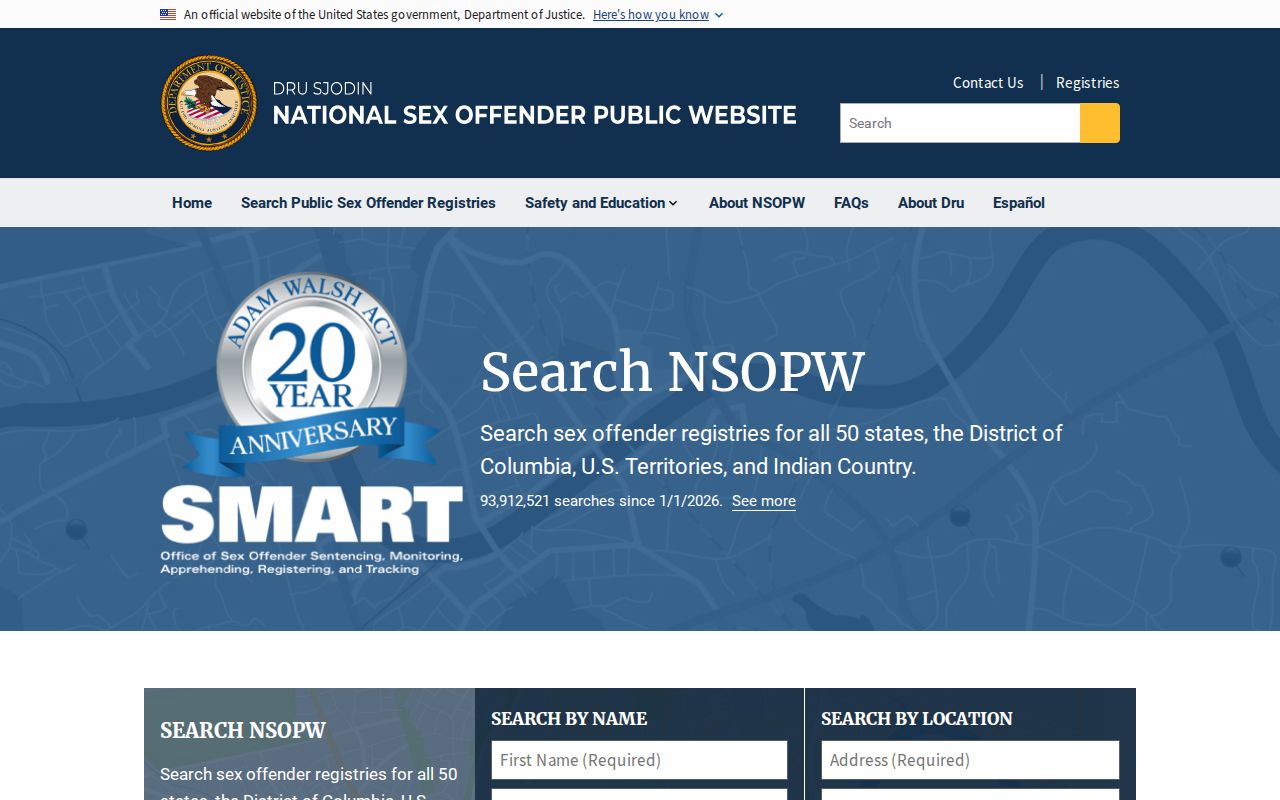
When the two systems seem inconsistent, record both retrieval times and ask the agency named in the Texas profile to verify the current facts.
Registry Profiles: What They Show
A public Smith County registry profile joins identity, location, offense, and compliance fields. It may show the registered name and aliases, a DPS photograph, physical traits, date-of-birth or age information allowed by law, the registration agency, public address granularity, and the reportable offense. It may also include a statute or jurisdiction, a conviction or adjudication date, sentence or release facts, marks or tattoos, and vehicle, school, or work data when Chapter 62 permits public display.
| Name and aliases | Registered identity and other names recorded in the public file. |
|---|---|
| Photo and description | DPS image plus sex, race, height, weight, hair, eyes, scars, marks, or tattoos when displayed. |
| Address or location | The public location detail authorized by Chapter 62, which may need agency confirmation. |
| Reportable offense | Offense, statute or jurisdiction, and conviction or adjudication facts supplied to the registry. |
| Registration details | Status, verification information, reporting agency, and any public compliance or absconded notice. |
| Other public fields | Vehicle, school, work, sentence, release, or victim-category data only where the law and interface authorize it. |
A profile is not a full rap sheet. The Texas public conviction search follows Government Code Chapter 411, while a registry entry follows Chapter 62. Those systems answer different questions. Anyone reviewing their own statewide identity record should use the official DPS record-review route rather than infer a complete history from one Smith County profile.
Smith County Address Verification
An address that looks old should prompt verification, not confrontation. First rerun the Smith County lookup by county, ZIP, and map radius. Then compare the profile's verification data and registration agency. If the listing still appears stale, contact that named municipal police department or the Smith County Sheriff's Office. For an immediate threat, call 911. A public searcher should not visit the listed home or approach a person.
The DPS Crime Records FAQs reinforce the need to use official channels when a state crime-record detail needs explanation.
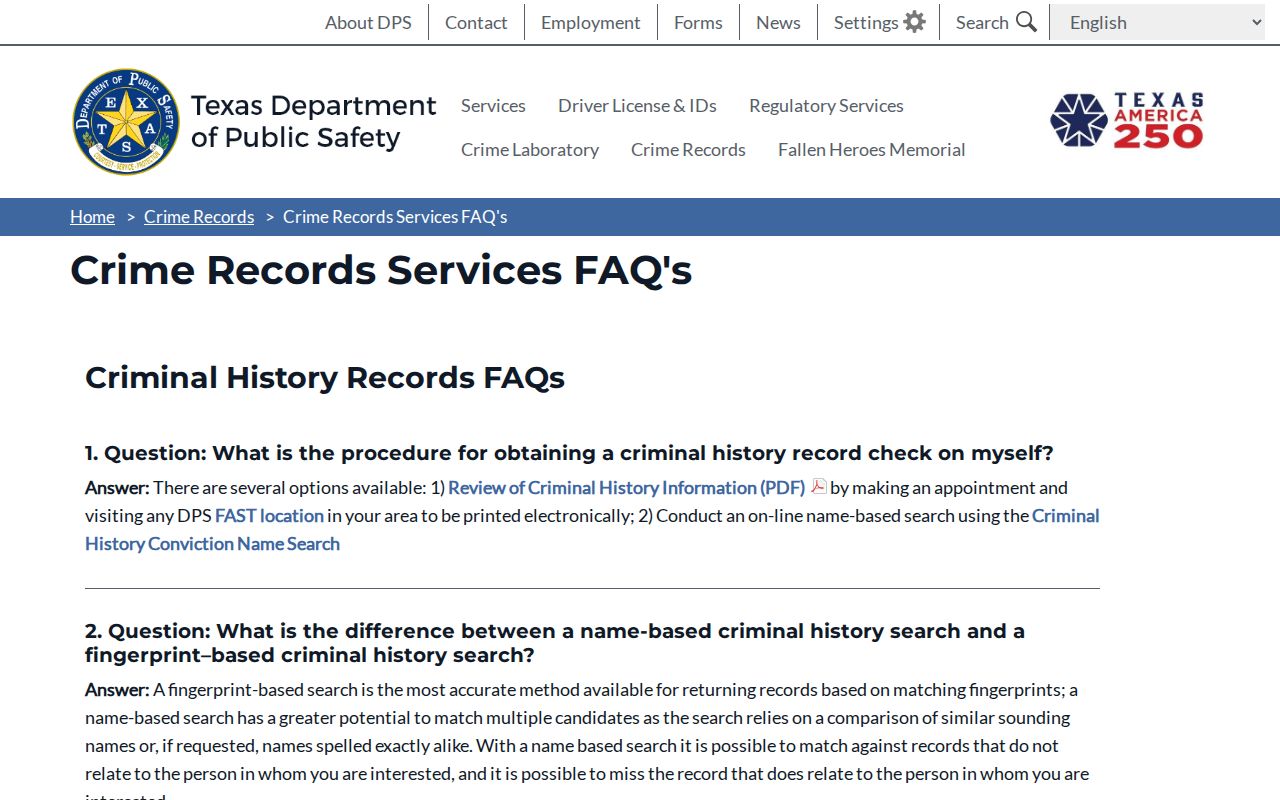
This verification chain also prevents a postal-city label from being mistaken for the law-enforcement jurisdiction that keeps the registration file.
Registration Levels and Duties in Texas
Texas does not publish a universal low, medium, and high tier scheme that can replace Chapter 62. Duration depends on the reportable offense and the facts that place the person in a statutory category. Under Section 62.101, many listed offenses carry a lifetime duty. Other duties generally end on the later of ten years after release from a penal institution or discharge from community supervision. Juvenile cases and early termination have separate provisions.
| Texas Category | General Duration | Verification Rule |
|---|---|---|
| Chapter 62 lifetime category | Lifetime for offenses listed by Section 62.101(a) | Use the offense-specific statutory schedule. |
| Chapter 62 non-lifetime category | Generally the later of ten years after release or supervision discharge under Section 62.101(b) | Annual or another schedule set by statute. |
| Frequent-verification category | Duration still follows the applicable Chapter 62 category | Every 90 days for specified registrants under Section 62.058. |
| Juvenile or early-termination rules | Separate rules apply | Do not infer an adult lifetime duty. |
The statutory text should be checked against the judgment, offense date, and amendments. A plain label on a Smith County result cannot decide duration by itself.
Texas Categories Without Tiers
The common mistake is to import a federal three-tier chart and assign it to Texas records. That shortcut is not supported by the Smith County research. Chapter 62 uses offense-specific categories, time periods, and verification duties. A person with a lifetime term does not gain a new public Texas "tier" merely because another system describes similar conduct that way. Read the reportable offense, then consult the governing provision.
The Texas criminal-history dissemination law offers a second useful contrast: Chapter 411 controls public criminal-history access, while Chapter 62 controls registration.
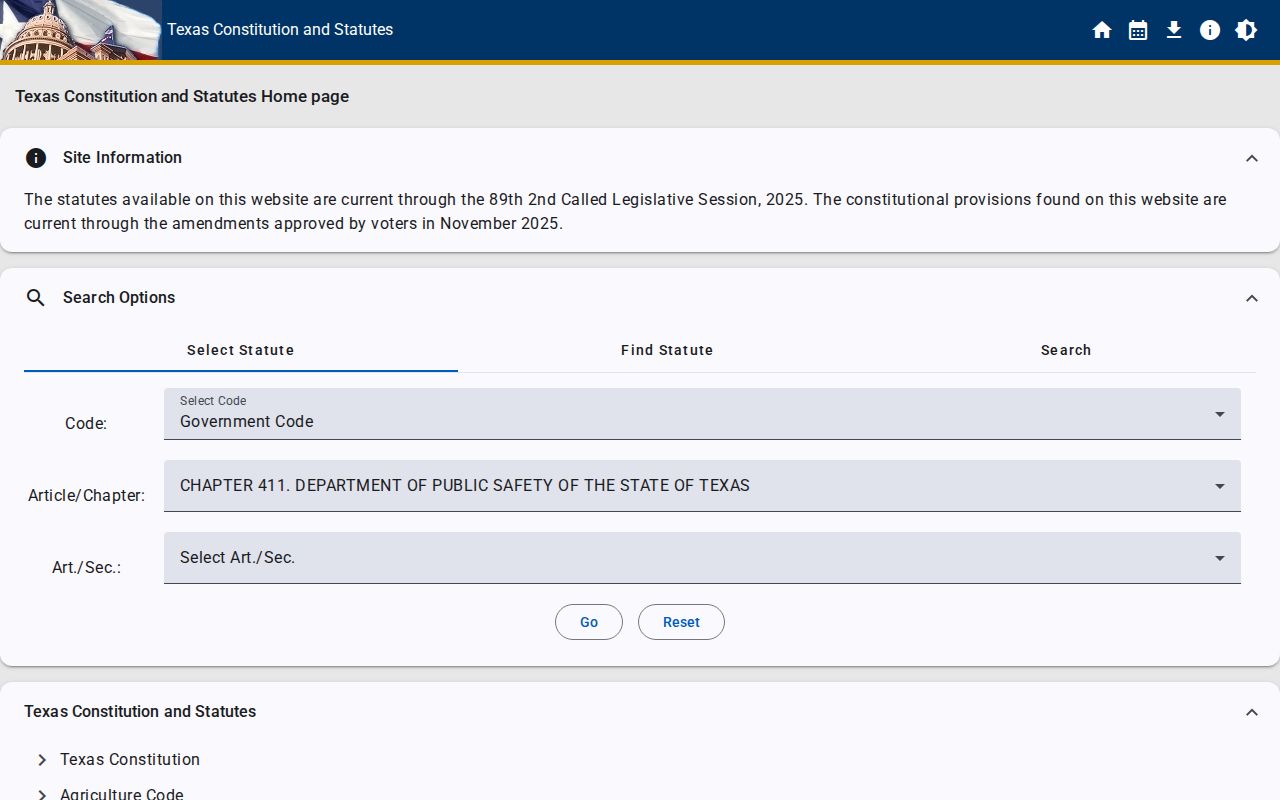
Keeping the two laws separate helps readers avoid treating the Smith County registry as a full conviction report.
Smith County Noncompliance Reports
Suspected noncompliance belongs with law enforcement. Use the registration agency displayed on the profile when possible. It may be a municipal police department or the Smith County Sheriff's Office, depending on the actual jurisdiction. Give the official office the profile, the detail that appears wrong, and the date it was observed. Do not post identifying data elsewhere or try to investigate at the listed address.
If the normal registry channel does not resolve a record-access question, the Texas Attorney General's public information guidance explains how to direct a focused request to the government body that holds an existing public record.
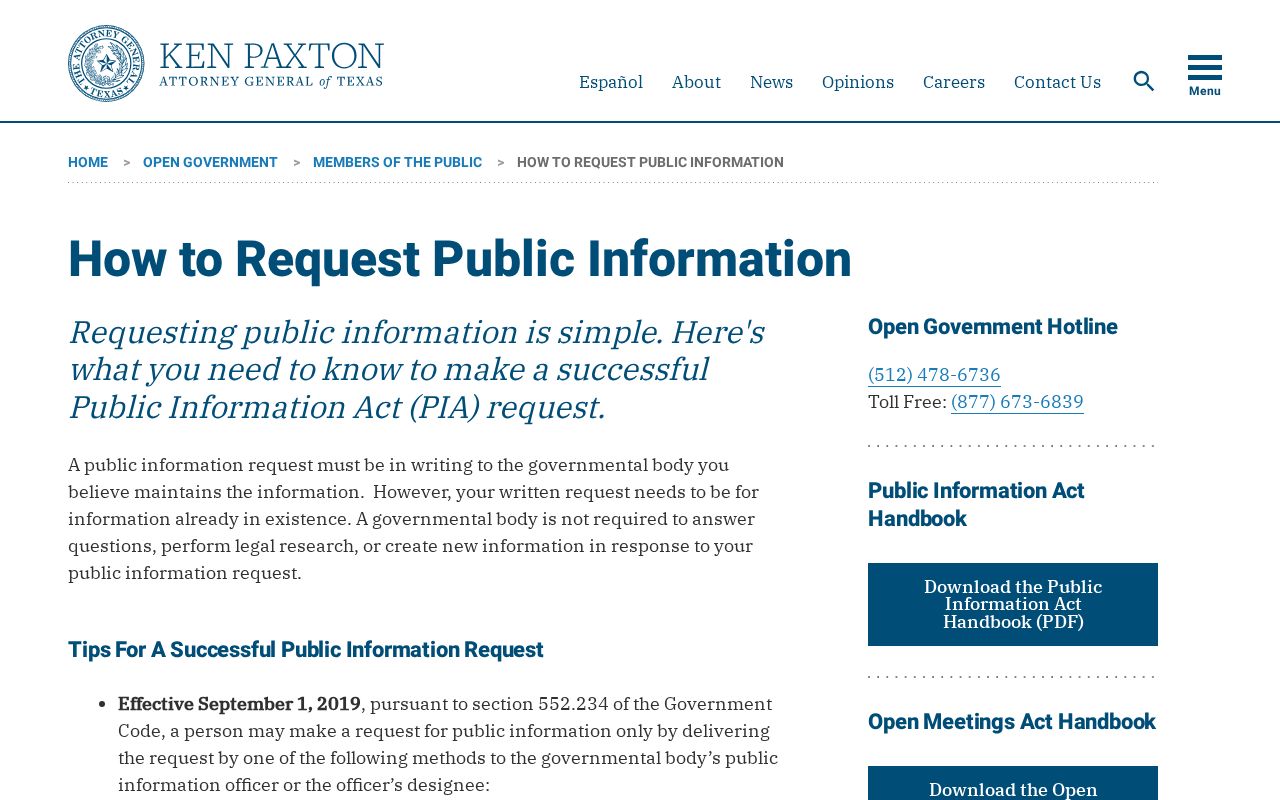
That request route does not replace a prompt report to the registering agency and is not the right response to an emergency.
Using Registry Information Lawfully
Smith County registry information is intended for awareness, verification, and practical safety planning. Treat each public result as a lead that can be checked with the office that maintains it. Do not use the photograph, address, or other fields to shame a household, organize a confrontation, or spread claims beyond what the profile actually states. When a public profile conflicts with another record, the official agency should resolve the difference.
The same care applies to requests for related records. Chapter 62 governs registration, while the Texas Public Information Act and other laws may control access to agency material. Some information can be withheld or redacted. A public registry entry does not waive every privacy or safety rule that applies to another file.
Misuse warning: Texas Code of Criminal Procedure Chapter 62 registry information may not be used to harass, threaten, intimidate, or support vigilantism; misuse can carry criminal or civil consequences.
Use government channels to confirm facts, preserve the search date, and call emergency services only when there is an immediate danger.